Blog title
Hey! I've moved. You'll be directed to my new blog in 3...2...1...

Have a Power Pop

Tuesday, August 21, 2012

Everyone has a bad day once in awhile, but don't let it steal your joy.  Find something beautiful and colorful to lift your spirit, like the umbrella's in this picture. They just make me smile. I've found it important lately to distract myself with what is lovely and not to listen to the nightly news so often; something I do a lot. It's not that I don't want to stay informed, I probably want to stay informed too much, but why? It's not like I'm really going to miss anything. Someone is sure to tell me about it sooner or later.

M. Scott Peck's first line of his novel, The Road Less Traveled states, "Life is difficult." Looking back over my last 57 years I'd have to agree with that. But then again, any of us who live very long get smacked in the face by life again and again. So it isn't so much the bad day that gets us once in awhile but a multitude of bad days compounded by a multitude of bad news from around your neighborhood, your state, your country and the world.Maybe it's the loss of a loved one, a diagnosis of cancer, or a child's mental illness. My family has been through difficult times, see Streams in the Desert if interested.Your family's probably been through rough times too.  Maybe it's murder or suicide or drunk driving accidents or the loss of a job. Maybe it's forest fires, shootings, robberies, or the battle for the White House. Stop the world, I want to get off we say at times. But really we can't and really we shouldn't try because we can make a difference.

If you're a writer, life is difficult in that arena as well. We are either trying to get published, stay published, or debating whether to go the traditional route to publication or the indie route. You probably heard the latest regarding the Interview with Sue Grafton. I heard about it from The Kill Zone Blog on Sunday. James Scott Bell's post covered it and you can read more here. But here again we can make a difference, each of us in our own way can choose to keep our joy and do something positive.

My latest idea at the college where I work is to make what I call POWER POPS.  A power pop is a Tootsie Roll Pop with a scripture or quote wrapped around the stick to help someone else have a better day. It might not change the world but it can make a difference to that someone who receives. So here's my personal Power Pop for you to help you hang on to your joy.

Pick your favorite flavor. I'll take a red one. Yum. Here's the quote for my day.
              
                    
No one can make you feel inferior without your consent.
                                        ~Eleanor Roosevelt

Here's my scripture for the day.

                                             For God hath not given us the spirit of fear; but of power, and of love, and of a sound mind. ~ 2nd Timothy 1:7


What quote or scripture will you wrap around the stick? My hope is that by the time you've polished off that pop you'll have a better state of mind to help you get through the day.

So go ahead. Pick a pop. 


Ten Things I've Learned Writing a Series

Tuesday, August 14, 2012

Ralph Waldo Emerson said, "Do the thing and you'll have the power." I've found that to be sound advice while writing the three books for my first published series. I feel like an Olympian with a gold medal. I've finished Book Three of The Ravensmoore Chronicles, Mystery of the Heart,  which releases January 2013. It's been an exhilarating, frustrating, hair-pulling, joyful experience.

1)  Don't count on having only one editor.
           I had a different editor for each novel.You're publishing house may work differently. This is a good question to ask before you sign on the dotted line. However, I learned a lot from all three of my editors.

2)  Beware if you write by the seat of your pants.
           That's me! I almost didn't make it through Chameleon, Book Two. I wrote this novel in scenes and I loved doing it that way but the time pressures got to me. It was through a lot of patience, blood, sweat, and tears and an incredible editor that I made it to, The End, with a smile on my face.  

3)  Beware if you plot yourself into a corner
           I spent a lot of time semi-plotting Book Three, Mystery of the Heart. I plotted myself into a difficult situation but found my way through it. It was time consuming, but I figured it out on my own.

4)  Be prepared to kill your darlings.
         It's true. I'm talking chapters. My editor for Book One cut about 25,000 words and eliminated my wedding scene at the end of the book. That hurt, but I accepted it. I think I'll eventually put that scene on my website for the curious.

5)  Keep track of everything
         You'd think this would be easy, a no-brainer. I lost track of names, eye color, ages, etc. Find a way that works for you. I'm now going to explore Scrivener and I did utilize Randy Ingermanson's Snow Flake method to some extent but found I couldn't quite be that detailed. I'm still exploring the best way for me to stay organized.

6)  Teaser chapters
          Write the first chapter of your next book in the series ahead of time. I didn't know I was going to have to do this and had to work hard to make it happen when I turned in Book One. I was prepared better when I had to have the teaser chapter ready at the end of Book Two.

7)  Reader Discussion Questions
          I hadn't even thought about this issue until recently. Book clubs might want these in your novels. I'll probably put discussion questions at the end of Book Three and I'll probably go back and put questions on my website for the first two novels.

8)  Know your limits.
          I've learned about the difficulties of writing while working full-time and coping with the unexpected. You will always need more time unless you're really experienced and know your abilities in this business. It's a learning curve as my agent Rachelle Gardner says and she is so right.

9)  Balancing writing, marketing, and social media, with your deadline.
          I think this is incredibly hard. You must help market your books and I enjoy doing this, but when you're trying to write your next novel, and do all that is going to help your novel be noticed in an oh so saturated market is, as we regency writers might say, beyond the pale. Just too much.

10) Be professional.
           No matter what happens be wise (I pray for the wisdom of Solomon). Keep your sense of humor and share your knowledge with others.  

There is so much more, little nuances that come into play. But if this is what you want with all your heart and soul you will find a way to do it. Do your best and trust God for the rest.

Are you considering a series? Got questions? Feel free to ask. I may not have the answer but someone else might. If you've written a series please share what you've learned along the way. 

I love this quote. So perfect for our struggles. "Flaming enthusiasm, backed up by horse sense and persistence, is the quality that most frequently makes for success." Dale Carnegie

Reader Discussion Questions

Tuesday, August 7, 2012

I was recently asked to send some questions to a book club regarding my first novel. I was thrilled that the hostess had chosen my book, Secrets of the Heart, to discuss. So I'm currently pulling together a list of questions. It's fun. I have to admit that it would have been easier if I'd done this right away when my book was being published. Now I have to go back to book one while I'm editing book three and try to think of questions that might stimulate conversation at a book club gathering.

Since I am in the midst of editing I'm thinking I should just go ahead and and think of questions that readers may want to discuss at the end of book three. I also think I'll develop a section of my blog for this for those readers that are interested.

As an author I ask myself a lot of questions when I start writing a book and I decide to write a book based on how much it interests me hoping that it will interest others. Some of these very same questions may in fact be those reader questions. Perhaps this practice could help us deepen our novels. What do you think?

Do you like reading novels where the author provides reader questions? Do you do this yourself for your own books whether or not you are published? Is this something you've seen more often in contemporary novels than historical novels? More often in non-fiction than fiction?


The Write Conversation

Tuesday, July 31, 2012


Greg Mitchell who blogs along with me and the other Realms authors at Just The Write Charisma asked this question last week, Why Do I Bother?  Of course this question made me wonder. Hmm. Scary thought, Greg. No wonder you write speculative fiction. So in my usual style I went into research mode, but on myself this time instead of a novel.

My third book, Mystery of the Heart, releases in January 2013 and that wraps up my current and only contract. So I picked up my copy of Stein on Writing on a nearby bookshelf. Sol Stein says, “If you are a writer, you are never retired by someone else. You not only keep going, but the very act of writing helps keep you alive.”  So true. With all the talk about traditional publishing verses indie publishing the one thing I have to remember is that whether I continue to publish or not I don’t have to quit writing. There is reward in the writing itself but I do love a paycheck. And I do believe the act of writing has kept me alive by not internalizing the stress of difficult life experiences. Writing is better than an ulcer, indigestion, or high blood pressure. If you write through life difficulties you might save your health and have fodder for new novel ideas.

June 2012
Later I read through my June 2012 copy of The Writer Magazine You must, absolutely must read Pat Conroy’s article entitled, Interpreting the World Through Story. I can’t copy and paste his article here or I would if I wouldn’t get in trouble. I wanted to share every word with you so instead I’ll just share a few words and you’ll have to read the article yourself. “The idea of a novel should stir your blood. It should be instinctual, incurable, unanswerable, and a calling, not a choice.” Do I feel that way? Sometimes. Do you feel that way? 

He also talked about his childhood and the role it played in his writing. Have you ever read, The Great Santini? Conroy says, “My mother’s voice and my father’s fist’s are the two bookends of my childhood, and they form the basis of my art.” Wow! If you want to explore some deep psychological issues write down your own bookends. 

Each of us have reasons for writing. Every once in awhile we should revisit the question Greg asked, Why Do I Bother? There's a difference in the need to write, the want to write, and the have to write for a contract. I good time to think about these things if you are a published author is between contracts. I would encourage unpublished writers to explore their reasons for pursuing publication. Is it the desire to know that you were able to reach that self-imposed pinnacle? To get rich and famous? To share your thoughts with others?  To answer a calling? To give an offering? To discover a purpose?

In the same issue of The Writer Magazine, Maeve Binchy provides A Little Inspiration and discusses the issue of finishing the book. She states, "If you stop now, let's look at what you have wasted." This hit home for me. I wrote and studied the craft for twenty years before I received a contract.Are you willing to work that long and invest in yourself that heavily? Only you can make that decision. As for me, I'm going to spend a lot of time talking to my family, to my agent, and to God. For now I'm going to try and remember Psalm 46:10, Be still and know that I am God.

 Henry Wadsworth Longfellow said:

“Let us labor for an inward stillness--
An inward stillness and an inward healing.
That perfect silence where the lips and heart
Are still, and we no longer entertain
Our own imperfect thoughts and vain opinions,
But God alone speaks to us and we wait
In singleness of heart that we may know
His will, and in the silence of our spirits,
That we may do His will and do that only.”


Have you had the write conversation?

Perception

Tuesday, July 24, 2012


Eric McCormack is currently playing a paranoid schizophrenic in a new crime drama called, Perception. It aired for the first time on Monday, July 9th. I'm hoping that it will make a difference for the many people who suffer with any kind of mental illness. One of my concerns with Dr. Daniel Pierce is that he's not on his medication. Typically not a good thing for anyone with Schizophrenia. Schizophrenia: What You Need To Know According to NAMI (National Alliance on Mental Illness), "Schizophrenia is a serious mental illness that affects 2.4 million American adults over the age of 18.) You can learn more here about Schizophrenia

However, Daniel Pierce has a buddy, Max Lewicki, that tells him when his hallucinations are legitimate. Most people won't have that luxury.  

Family members do the best they can in most situations where someone is mentally ill, but they can't always control their loved ones and suffer right along with them. Perception can have a positive impact if they handle situations appropriately. The show could make progress against the stigma of mental illness and provide education. I hope they don't blow this. I think some viewers think that it may already be too late because of the medication issue, but perhaps that's coming later. I think the story of John Nash and the book and movie, A Beautiful Mind portrayed this illness in an incredible way.

I do think Monk had an impact on making television audiences more aware of what it's like to live with obsessive compulsive disorder. Adrian Monk, played by actor Tony Shalhoub won a few Emmy's and a Golden Globe for his efforts. This type of show makes talking about mental health issues a little easier for the general public and that's important.The more we discuss these illnesses the more hope there is of finding a cure and getting those to treatment that perhaps have been afraid to go. I even found this article on WebMD when Monk aired its 100th episode.


I write historical romance with a heavy mystery/suspense component for several reasons:

1) I love it! It keeps me sane in a world gone bonkers.

2) I want to bring to life the history of mental illness.

3) I hope the novels I write make a difference to help destroy the stigma of mental illness and encourage others to do likewise. How many people living today can say they've never suffered from at least some mild depression? Sir Winston Churchhill called depression his black dog.

"I don't like standing near the edge of a platform when an express train is passing through. I like to stand right back and if possible get a pillar between me and the train. I don't like to stand by the side of a ship and look down into the water. A second's action would end everything. A few drops of desperation." - Winston Churchill (1874-1965)

If you think the treatment of mental health has changed tremendously in the last couple hundred years, it has, and it hasn't. Yes, we have more medications that work for some and don't work for others. Yes, we have hospitals but not everyone has insurance and not everyone gets the best care in these facilities. Some are excellent and some not so good. Schizophrenia Survey

So what's your perception on the new show, Perception? Why do you write what you write? Have you ever wished you could change the world? Maybe that's just delusional thinking.


Blindly Guided

Tuesday, July 17, 2012

 
Hi Everyone,

Please welcome my very special guest blogger today, Jordyn Redwood.

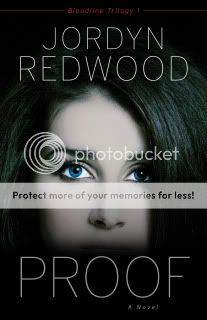
Jordyn is a pediatric ER nurse by day, suspense novelist by night. She hosts Redwood’s Medical Edge, a blog devoted to helping contemporary and historical authors write medically accurate fiction. Her debut novel, Proof, garnered a starred review from Library Journal and has been endorsed by the likes of Dr. Richard Mabry, Lynette Eason, and Mike Dellosso to name a few. You can connect with Jordyn via her website at www.jordynredwood.net.

Okay, I have a confession to make—I’m a fan of reality TV. Not the find-your-husbad-I’ve-fallen-in-love-in-30-seconds shows but those with somewhat of a purpose. Survivor, lots on Food Network—Wipeout completely cracks me up.
My most favorite show right now is Master Chef. I am a fan of Hell’s Kitchen (why do so many cooks smoke?) but honestly, Mr. Ramsey, I cannot watch all of your swearing with my 7 and 9y/o’s watching too. Master Chef provides a much softer side of Gordon Ramsey.
The show centers on home cooks trying to win a competition where they’ll get a book deal for a cookbook and a cash prize.
Amateur’s cooking for a book deal—sounds like how I started writing!
This season, there is a blind woman, Christine, in the competition. I don’t mean she has poor eyesight—she cannot see at all! She has a guide who can grab ingredients for her from the pantry and can tell her how something looks—like your pie crust is brown—if Christine asks. But, the guide is NOT allowed to assist her with the cooking in any way. No help cutting, measuring, and plating.
It’s been a fascinating adventure to watch this woman. A fellow contestant who wanted her out of the competition decided she should cook a live crab! I mean—is that cruel or just a smart competitive move? I won’t share which way I’m leaning.
Christine’s efforts on Master Chef have caused me to think about my Christian writing life. As a Christian, I feel I do need to look to God for direction—but I cannot see him or hear him, which can make decisions hard. Do I write this book? In this genre? Go with this publisher? 
So, taking some points from Christine—this is how I think our adventures parallel.
1.You do have a guide. Obviously, Christine cannot see the woman helping her, but she IS there. We physically can’t see God but there are footprints of His presence. Creation—really mind boggles me sometimes the intricacy of nature and the human body. The Bible. The historical record. 
2. Have you asked for help? This is perhaps one of the things I’m terrible at. Christine has to ask her guide for help to stay on track. What’s the color of my pie crust? How often do you flat out pray to God for help in decision making? I am horrible at it. As an ER nurse, I’m used to people looking at me to make very important decisions on a moment’s notice so I tend to rely on myself a lot more than I should. I’m imperfect and I need to be close to God to help hear him in those moments when I do ask for help. Spend time with God through Bible reading, worship and prayer.
3. Block out the noise. In a recent episode of Master Chef, Christine was in charge of her team when they had to do morning room service at a busy hotel. She cannot see what her team is doing and all she’s hearing is a lot of fighting. It was hard to make out a single voice in that instance. Jesus is noted in the Bible to pull away from the crowds into a quiet place for prayer and reflection. I believe he did this out of need but also as an example to us. In order to hear our guide, we need to block out the other noise.
How about you and your writing life? Do you want God to be a guide? How do you tune in His presence?


 Dr. Lilly Reeves is a young, accomplished ER physician with her whole life ahead of her. But that life instantly changes when she becomes the fifth victim of a serial rapist. Believing it's the only way to recover her reputation and secure peace for herself, Lilly sets out to find--and punish--her assailant. Sporting a mysterious tattoo and unusually colored eyes, the rapist should be easy to identify. He even leaves what police would consider solid evidence. But when Lilly believes she has found him, DNA testing clears him as a suspect. How can she prove he is guilty, if science says he is not? 

You can purchase Proof here.